Prevalence study of Giardia among domestic dogs in Baghdad city
Article Sidebar
Main Article Content
Abstract
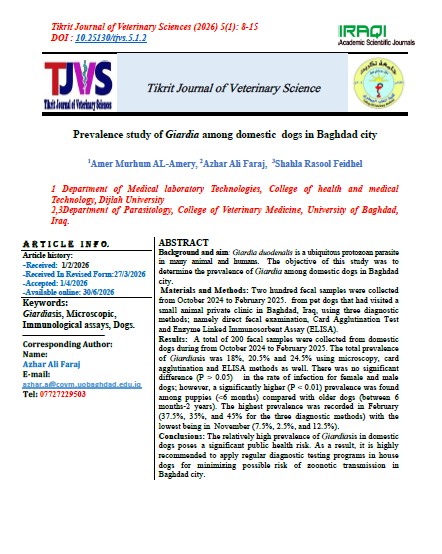
The objective of this study was to determine the prevalence of Giardia among domestic dogs in Baghdad city, using three diagnostic methods; namely direct fecal examination, Card Agglutination Test and Enzyme Linked Immunosorbent Assay (ELISA). A total of 200 fecal samples were collected from domestic dogs during from from October 2024 to February 2025. The total prevalence of Giardiasis was 18%, 20.5% and 24.5% using microscopy, card agglutination and ELISA methods as well. There was no significant difference (P > 0.05) in the rate of infection for female and male dogs; however, a significantly higher (P < 0.01) prevalence was found among puppies (<6 months) compared with older dogs (between 6 months-2 years). The highest prevalence was recorded in February (37.5%, 35%, and 45% for the three diagnostic methods) with the lowest being in November (7.5%, 2.5%, and 12.5%). In summary, the relatively high prevalence of Giardiasis in domestic dogs poses a significant public health risk. As a result, it is highly recommended to apply regular diagnostic testing programs in house dogs for minimizing possible risk of zoonotic transmission in Baghdad city.